
Bird nesting season and what to look out for on your commercial site.
Spring is one of the most rewarding times of year to be working outdoors. As the days grow longer, temperatures begin to rise and the natural world quietly comes to life. For those managing or maintaining commercial outdoor spaces across West Yorkshire and beyond, it also signals the start of bird nesting season, which brings a few important responsibilities worth being aware of.
Whether you manage a business park, a residential development or an industrial site with green space, this guide explains what bird nesting season means in practice, what signs to look out for, and how to manage your outdoor areas responsibly during this time.

When does nesting season run?
In the UK, the main bird nesting season typically runs from late February through to the end of August, covering the breeding period for many common species. However, the exact timing can vary depending on weather conditions and the type of bird.
Some species, such as robins and blackbirds, may begin nesting as early as January during milder winters. Others, including migratory birds like house martins and swallows, return from overseas and start nesting later in the spring once temperatures rise.
The key takeaway is that nesting activity can span much of the year. Because of this, it should never be assumed that nesting has safely finished before the end of summer, particularly when carrying out landscaping or vegetation management works.
Your legal obligations
Under the Wildlife and Countryside Act 1981, it is a criminal offence to intentionally damage, destroy or remove the nest of any wild bird while that nest is in use or being built. It is also illegal to disturb birds while they are at or near a nest containing eggs or young.
These protections apply to everyone. Whether work is being carried out on a commercial site, a residential development or as part of a routine maintenance programme, the legal obligations remain the same.
Getting this wrong can have consequences beyond financial penalties. Work may need to stop immediately, project schedules can be disrupted, and reputational damage can be a significant concern, particularly for organisations operating in public or highly visible spaces.
This is especially relevant for activities such as commercial hedge cutting, hedge trimming and vegetation clearance, which are among the most common grounds maintenance tasks where active nests may be encountered.
Where birds tend to nest on commercial sites
Birds are adaptable and commercial sites can offer a surprising range of nesting opportunities. Common locations to be aware of include:
Hedgerows and dense shrubs, which are among the most popular nesting sites for sparrows, blackbirds, and wrens
Trees at any height, from low branches to high canopies, including those subject to planned tree works
Ivy and climbing plants on walls or fencing
Roof spaces, guttering, and eaves, particularly for starlings, house sparrows, and house martins
Piles of material or vegetation left undisturbed on site
Ground-level nesting in tussocky grass for species such as skylarks and lapwings on larger open sites
It’s also worth noting that birds can take up residence in hedges and shrubs very quickly once conditions are right. Across West Yorkshire, resident species such as song thrush, dunnock and long-tailed tit regularly nest in managed hedgerows and planted shrub beds, particularly in well-established green spaces. Because of this, areas that appear to be inactive earlier in the year can quickly become important nesting habitats once spring arrives.
What to look out for
Before any vegetation management or grounds maintenance work takes place during nesting season a careful visual check should always be carried out. There are several signs that nesting activity may be present in hedges, shrubs or trees.
Common indicators include:
Birds repeatedly entering or leaving the same hedge, shrub or tree
Agitated behaviour from adult birds, such as alarm calling or flying close to people
Birds carrying nesting materials such as grass, moss or twigs
Visible nest structures when hedges or shrubs are inspected carefully from a distance
Fledglings on or near the ground, which may appear vulnerable but are often in the final stages of development and still being monitored by their parents
If any of these signs are present, work in that area should be paused while the situation is assessed. In many cases, this simply means delaying hedge cutting or vegetation clearance until the nest is no longer active.
On larger or more complex sites, it may be appropriate to involve a qualified ecologist who can carry out a formal breeding bird survey before landscaping or maintenance work begins.
What to do if you find a nest
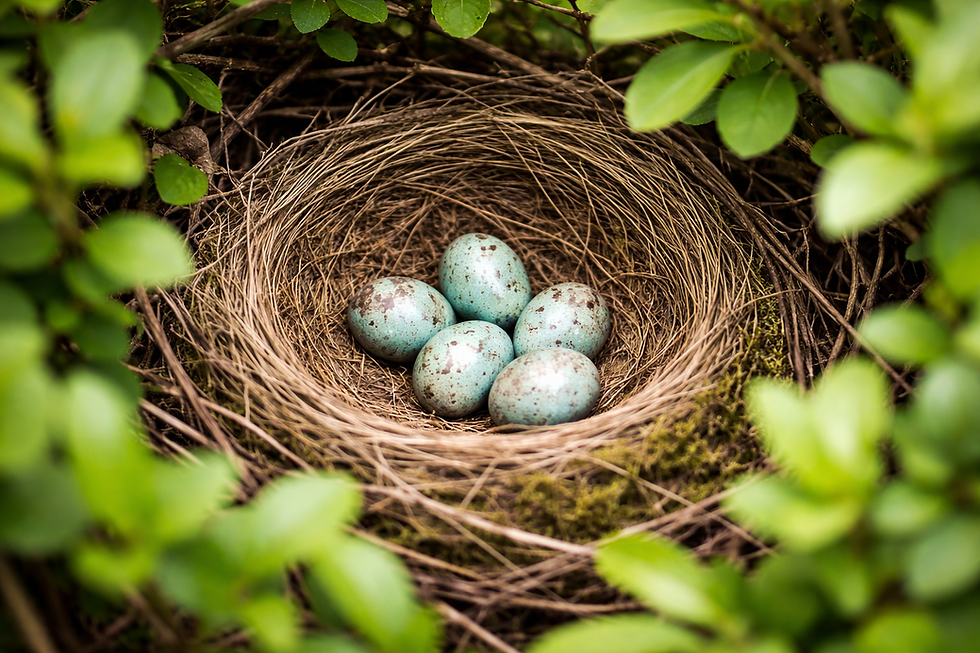
The simple answer is, leave it alone. An active nest containing eggs or young birds must not be disturbed. In most cases, nests are only occupied for a short period of time and will be vacated within a few weeks once the young birds have fledged. The most practical approach is usually to work around the area until the nest is no longer in active use.
It’s important not to attempt to move a nest, even if it appears to be in an inconvenient location. Moving a nest without a specific licence is illegal. Such licences can only be issued by the relevant statutory nature conservation body and only in very limited circumstances.
If you are unsure whether a nest is active, it’s always best to err on the side of caution. Often, simply revisiting the area a day or two later will make the situation clearer.
Planning works around nesting season
The most effective way to manage nesting season on a commercial site is through forward planning. Where hedge cutting, hedge trimming, shrub management or significant vegetation clearance is required, the most suitable window for this work is typically between September and February. Carrying out these tasks during the autumn and winter months helps avoid the main nesting period and significantly reduces the likelihood of encountering active nests.
If work cannot be delayed, a thorough pre works nesting check by someone familiar with nesting bird behaviour should always be carried out before any cutting, clearing or disturbance takes place. Recording the findings of this check, including the date and observations made, is also considered good practice and provides a clear record should questions arise later.
Routine activities such as grass cutting, light path clearance and general site tidying can often continue during nesting season, provided that hedges, shrubs and trees remain undisturbed. Understanding these boundaries is key to maintaining outdoor spaces responsibly.
For sites where biodiversity forms part of a planning requirement, such as developments with biodiversity net gain obligations or dedicated green space, taking a proactive approach to nesting season also helps demonstrate responsible environmental management to stakeholders and planners.

The professional approach to nesting season
At Palmer Landscapes, nesting season is something we plan around as standard practice. Our grounds maintenance contracts across Leeds, Bradford, Wakefield, Halifax and the wider West Yorkshire area are structured with the Wildlife and Countryside Act in mind. Wherever possible, hedge cutting, hedge trimming and shrub management are scheduled outside the core breeding season.
Where seasonal work does need to take place during the nesting window, our experienced team carries out a pre works nesting check before any work begins. If an active nest is discovered, we adjust the programme accordingly and keep our clients informed about the steps being taken.
On sites where ecological or biodiversity requirements form part of a planning condition, we can also coordinate with specialist surveyors to ensure all necessary checks are completed before work proceeds. For our clients, this means one less compliance concern to manage.
As a commercial landscaping and grounds maintenance contractor with more than 55 years of experience, we take responsibility for maintaining outdoor spaces to a high standard while protecting the wildlife that depends on them.
If you’re in the process of reviewing your grounds maintenance arrangements ahead of spring, or want to ensure your site is managed responsibly during nesting season, our team would be happy to help.
Get in touch with us to discuss a tailored plan for your site.
📞 0113 2578 586✉️ info@palmerlandscapes.co.uk



Comments